
An Enayran Funeral
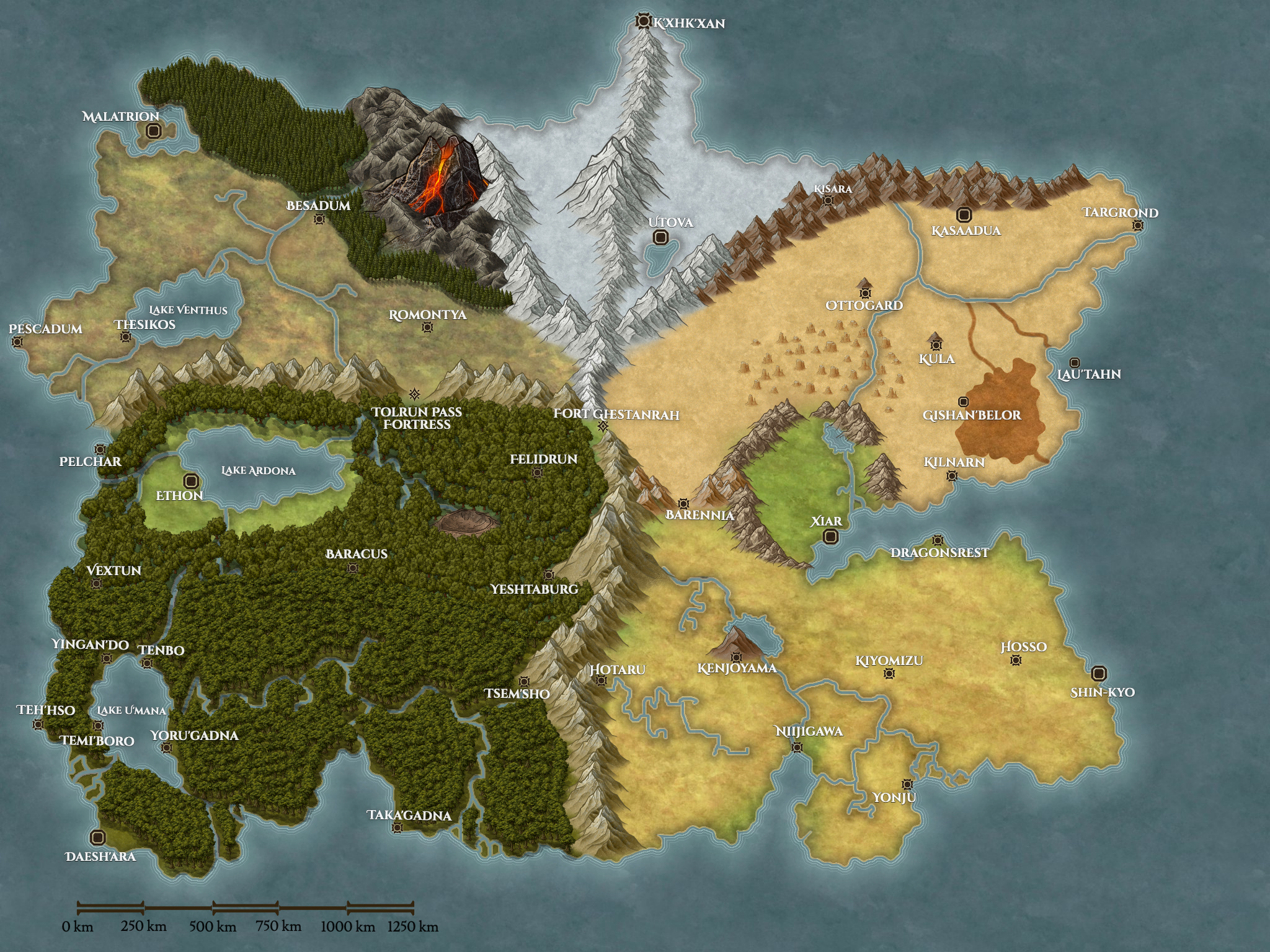
As a land that has been at war in one form or another since dragons first came to the land–and especially so since the arrival of humans–death is a common thing in Enayra.
Humans dies, animals die, plants die, and dragons, though long lived, also die, especially since the previous civil war that occurred among their kind a thousand years prior when Tenebrae first rose to power.
But as Enayra is a land of many cultures and creatures, it is a land with varying practices and rituals involving death, the dead, and dying. Many of the various countries and cultures in Enayra practice Dragomancy, bar some exceptions, which was created from the marriage of Old World Aspectism that came to Enayra with the first wave of human migration, and was syncretized with the existence of ancient, near-all-powerful dragons that headed up the various clans, and the Metallic Dragons who ruled over the species.
Dragomancy and Aspectism alike believe not in all powerful gods, but a single demiurge, known as Inor, who created all that exists, and set into motion all that would be and exist. Upon completion of his sacred task, he diminished, his body decayed, and he soul became the cosmos and stars above, and what remained of his physical form broke into fifteen aspects. These aspects were beings of duality; sometimes depicted as two beings in one shapeless, genderless, form, or, as one soul split across two bodies/existences.
Each Aspect, therefore, forms a related pair of natural processes, such as Night and Day, Soul and Rebirth, Plants and Nature, etc. Of these aspects, four were considered to be singular beings with sole dominion over a single area, these being the Aspects of Life, Death, Chaos, and Order.
When Old World Aspectism came to Enayra with the first wave of humans, some of these humans took to worshipping the Patriarch and Matriarchs of the Dragon Clans and the Metallic Dragons as physical embodiments of these, with Metallic Dragons taking the roles of the singular divinities, and Aurum as Inor, the demiurge. The Earth Mother and Father take on the role of the One True Beings, the true gods that tasked the demiurge with creation, and maintain that balance from the afterlife.
Practitioners of most forms of Dragomancy believe that the souls of the dead return to be with the Earth Mother after death, and add their spiritual strength to hers in replenishing and maintaining the balance of nature and the planet. It is said they join a great chorus of souls that sing life into the world, and add to something called The Great Hum, or The Great Song. The souls of the wicked and evil are sent to a place known as the Nine Hells, where they face various forms of constant torture and pain through varying and worsening levels of punishment, until their souls are distilled and purified through such torture, and allowed to join The Great Song after their purification.
The especially wicked are believed to be outright rejected from the cycle, and are left to roam the earth as vengeful, restless spirits, forced to endure physical pain that is said to ten-fold the pain they inflicted upon others in life.
This belief in the Nine Hells does not exist among dragons, who also believe in the regenerative cycle of life and death, and passed that belief on to the early adherents to Dragomancy. This belief is something drawn and kept from Old World Aspectism.
Because of these beliefs in a regenerative cycle of nature and life, bodies are mostly left intact after death, and are buried within the ground, with a handful of Night Lily seeds scattered over the remains. Only very select few are cremated, such as those who die in combat, war heroes, honoured members of society, or those who died of disease. These chosen few are burned in the giant braziers of the Eternal Flames lit within the ancient temples across the land, and their ashes interred in mausoleums and necropoli.
It is believed because they gave so much of their bodies in life, the weight of their deeds upon their soul in death is enough to gain them entry into the Earth Mother’s embrace, and their bodies are allowed to remain as a beacon of their power and influence in the physical world. Many of these honoured dead are worshipped as saints, whose remains are said to hold spiritual, holy power that can do everything from turn the tides of war, to fend off a nation’s enemies, to healing the land of a blight, or drought, or stop other natural disasters.
In Old World Aspectism, which is only practiced in Altimara proper today, when one dies, they are sent to a sacred realm to live among the Aspects to become demigods, who feast and dance among the cosmos forever. The wicked, however, go to the Nine Hells, however in Old World Aspectism, there is no escape from this place. No redemption or purification, just eternal punishment.
Since the end of the Age of Conflict, Dragomancy has not been considered a traditionally “organized” religion, in that there is no longer a hierarchy of priesthood, nor a division of priestly classes and lay people. As Dragomancy evolved out of Old World Aspectism, separated from the Old Church in the west in the east in what is now Altimara, it took on a more community based approach. As the Old Church decried this new “dragon loving” religion as heresy, the new believers were left without clergy, or a hierarchy, and so chose to make the community of believers responsible for the maintenance of temples, beliefs, and the leading of ceremonies and worship.
As Enayrans slowly came to peace with their draconic neighbours, or at least, ambivalence, more and more slowly turned to Dragomancy, over the Old Religion, and the old hierarchy of priests crumbled away and was forgotten.
Nowadays, every temple and chapel is watched over by the members of that religious community. Turns are taken, based on lots drawn, over who takes which duties for any given month, with roles being traded at the start of a new month. Because of this, while there are still “priests” and “priestesses” in the sense that those who lead the worship for that month are called that, they are still lay people who have simply been given a temporary task.
Because of this lack of central authority and hierarchy, much of the politicking and abuse of power found in the Old Religion, and indeed, in the Altimaran reconstruction of the Old Religion, has mostly disappeared. However, it has also had the interesting side-effect of allowing for a flexible, if sometimes non-existence orthodoxy.
Ironically, this originally syncretic religion has allowed for itself to become syncretized with older beliefs held by newer waves of human arrivals in Enayra, and even Enayran groups who have broken off from mainstream Dragomancy entirely.
For example, the Qiri’ar, one of the three modern descendants of the first settlments of humans who first created modern Dragomancy in the east (the other two being the Xiarans and the Altimarans, who are break-away groups of the pre-Qiri’aran Unification tribes) no longer believe in mainstream Dragomancy. The unifier of the modern Qiri’aran Confederacy, Eshgalon the Great (or the Mad, depending on the source), pledged his people’s eternal service and worship to Tenebrae and his mate, Kyna’braxa, as the Aspect of Night and Day, Isunath and Kistaroth respectively.
Tenebrae, known as Vihl’ku’lehg, or Father of Night, in Qiri’aran, promised Eshgalon’s people power and protection in exchange for their devotion.
Now, they worship only Isunath and Kistaroth as Prime Aspects, and forego the worship of all others. They believe in an afterlife where they become one with the Soul of Isunath, and add their power to his, and in doing so, are allowed to exist and fight on for their Great God for all eternity, even after their bodies fail.
Another example are the Danaesh of Danaen. The Danaesh came to Enayran with an odd religion. Its name is lost to history, but its beliefs have been heavily studied by scholars across Enayra.
Unlike most religions, that give thanks to gods for all things–life, death, creation, destruction, salvation, and more–the Danaesh did not believe in gods above. They believe that all Danaesh, and by extension, all life–both man and beast–were but gods trapped in mortal flesh. They were luminous beings that would one day pass on, leave behind their fleshy prison, and ascend to godhood in The World on the Other Side. This world exists on the other side of every reflection, and any surface that reflects can act as a portal between the worlds.
The Danaesh thus place heavy importance on ancestor worship, for all their ancestors had passed on to become deities that would protect their descendants. They became familial deities and the patron gods of certain family lines and noble or royal houses. Some were worshipped by many families, and some were only known to a few remaining descendants. Some were forgotten entirely when a family line died out–or because their names were forgotten.
While Danaen now practices Dragomancy, they kept many of their older customs regarding death and ancestor worship–and the belief in a world beyond reflective surfaces. The Danaesh have syncretized Dragomancy with their original religion to create something new and wonderful.
The deaths of family members are still celebrated and lavish affairs. Tears are not shed, and sadness is forbidden. It is customary for family and friends to gather and remember their dead with joy and happiness. It is said in Danaen that it is always best to remember the person as they were in life, and so the attendees share stories and experiences with the deceased. They celebrate their lives and passing, and while their dead no longer die to become gods, they pass on to join the Earth Mother and assist her in renewing the planet, which is a venerable and noble pursuit in death. Death celebrations can last days or weeks, depending on the wealth, fame, and station of the deceased and their families.
Mirrors and other reflective surfaces near settlements are blessed and purified annually at the start of the new year, to avoid wicked spirits and evil beings from dragging people into The World on the Other Side. Reflective surfaces that are not blessed are not to be peered into, for they could still act as a bridge between the worlds, for no one knows what lies on the other side of unconsecrated reflections.
And yet, there are even those in Enayra who follow two religions, and walk two worlds. When the people now known as Especials (for their original name for themselves or their homeland is lost to time) arrived in Enayra, they brought with them a religion that revolved around heavenly beings, that, while still mighty and powerful, more resembled omnipotent nature spirits rather than all-powerful, immortal gods. These heavenly beings take on the form of divine animals when on this human plane of existence and use animals to watch over their believers. This religion has come to be known as Seishimism in Common, though its Espian name is Seishinto, roughly translating to “the way of the spirit”, though this is not the original name of the practice.
Unlike Danaen, who syncretized their religion to Dragomancy to create a hybrid of the two faiths, Espias upholds both religions as co-equal within their realm, though parts of both religions had syncretized to the other to some degree.
Many of the heavenly beings brought from across the seas have been forgotten or lost to time and memory. Only the five main heavenly beings of the original Espian religion remain: Suzaku the Vermilion Phoenix, Seiryu the Azure Sea Dragon, Byakko the White Tiger, Genbu the Black Tortoise, and Tenryu the Great Golden Dragon–nowadays Tenryu is often seen as another aspect or familiar of Aurum, the Great Golden Wyrm, who had long made his home near the Espian capital. These five deities are worshipped in both their animal and humanoid forms and are commonly depicted in Espian art and architecture.
If asked why they adhere to two religions, many Espians will explain that they use their ancient religion to guide how they live their lives from day to day. But they adhere to Dragomancy to become one with the new lands they call home and guide themselves towards what they call “The Enayran Afterlife”, where they will eventually expire and become one with the Earth Mother. Indeed, the new Espian view of the afterlife is vastly different from the afterlife of Seishinism, where the wicked would be punished, but the good would be allowed to walk between both worlds as an unseen, unheard spirit, quietly watching over the mortal realm, and living a comfortable, if boring and monotonous life in the underworld.
Still, there are those who have kept their pre-Enayran religions. These are the Lau’thso of Lau’than.
The Lau’thso were one of the two groups of humans who arrived during the Second Wave of Human Migration, and came from the eastern seas to settle on a large reef and an encircling sandbar off the coast of modern Altimara. Upon that place they built their capital, right upon the reef, known as Lau’than.
The people of Lau’than are famed sailors and boat-builders and are just as famous for their sailing songs as they are for their music-based water religion. It’s said you can hear a ship of Lau’thso arriving before you see their boat on the horizon.
The Lau’thso believe in only two gods–the Father Sky and the Mother Ocean.
According to the Lau’thso religion, all life comes from the water. But Mother Ocean, who is present in all bodies of water, came to love her mortal children more than her husband, and so the Sky grew jealous. This is why it storms; it is the Sky Father’s attempt to destroy the children that took his wife from him.
The seas grow violent in a storm because Mother Ocean fights back against her violent husband.
It is why the Lau’thso offer songs of prayer and adoration when sailing, both in times of calm and during storms, to offer support and thanks to Mother Ocean for life and their safety.
Because their livelihood, and their source of food, comes from the sea, they are eternally grateful for the Mother’s bounty and will sing in praise and worship of their Mother Ocean, often in unison, or a call-and-response style prayer song, and accompanied always by at least one drum and a steady rhythm.
When a Lau’thso dies, their bodies are wrapped within the sails of their own ship, and they are tied to two heavy rocks. The family will sail the body out into the far eastern seas beyond the horizon, from whence they came, and throw the body overboard, into the middle of the ocean to be returned to their Mother for all eternity, and to be kept far away from their jealous Father, who could harm them after death.
 Sam Accardi